

Static Electricity Solutions for Powder Processing
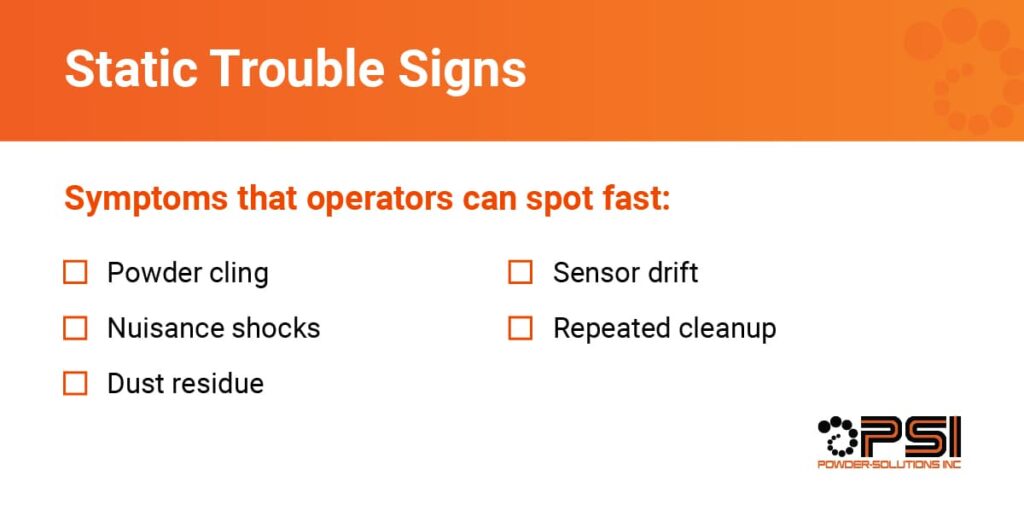
- Powder clings to surfaces
- Dust collects around connection points
- Filters plug up faster than expected
- Instruments drift or behave unpredictably
- Operators feel small shocks when touching equipment
Static creates real challenges for safety, cleaning, and day-to-day operation. These issues show up most often when dry powders move quickly through enclosed equipment, flexible connectors, bends, and fill points.
When charge builds and has nowhere to go, it can jump as a spark. In the wrong environment, that spark can ignite dust or vapors in the air.

Why Static Electricity Matters in Powder Processing
Static forms naturally as powder moves through your line. Particles rub against each other and against equipment surfaces, picking up and holding charge as they go.
Pneumatic conveying is a major contributor because it involves:
- High speed
- Constant contact with pipe walls
- Frequent changes in direction
Long drops, fast mixing, and repeated transfers between vessels add even more opportunity for charge to build. Dry air makes the problem worse because it gives static fewer ways to release.
These conditions can lead to:
- Sparks that ignite dust or vapors
- Powder sticking to walls and connector
- Sensors giving inconsistent readings
- Dust leaking around connection points
Static rarely appears as one dramatic event. It tends to show up as a series of small issues that add cost, downtime, and variability.
Common Sources of Static in Powder Systems
Some static sources are built into the process. Others come from small equipment details that are easy to overlook.
Powder moving through pipes, elbows, and spigots is a major source. Every bend increases contact with the wall. Every speed change affects how powder hits the surface.
Flexible connectors and connection points are also common trouble spots. Product crosses from one piece of equipment to another, the connection may flex during operation, and plastic or rubber materials can hold charge instead of letting it release.
A few conditions can make static problems worse:
- Dry air
- Higher line speeds
- Powders that hold charge easily
- Powders that wear equipment down and expose fresh surfaces
How To Remove Static Charge From Powder
There’s rarely a single fix. Effective static control uses a layered approach.
Grounding and Bonding
Make sure all metal equipment is tied together and connected to ground so charge has a clear path out of the system. This is essential — but it won’t always remove charge from the powder itself.
Environment
Check humidity in the problem area. Even small increases in moisture can help charge release more easily.
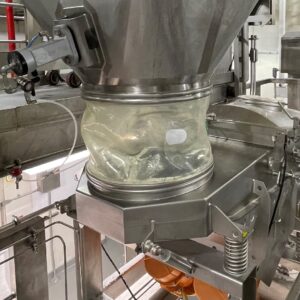 Process Conditions
Look for places where powder is moving faster than it needs to, dropping farther than it needs to, or hitting sharp direction changes. Reducing unnecessary speed, drop height, and hard turns can reduce how much charge builds.
Connector Materials
Review the materials used at connection points. In areas where plastic or rubber connectors are part of the problem, static-reducing options may be needed.
Containment and Sealing
A tighter seal at connection points improves housekeeping and reduces the dust that can act as fuel if a spark occurs.
These layers become especially important when handling combustible dusts, working in areas where dust or vapors can collect, or seeing repeated signs that static is building faster than your current setup can handle.
Operator Checklist for Every Shift
✔️ Check for dust around connectors, clamps, and spigots
✔️ Note whether shocks are happening during normal equipment contact
✔️ Look for loose or broken ground connections
✔️ Watch for powder sticking inside clear sections, hoppers, or flexible connectors
✔️ Flag any odd scale, level, or sensor readings near known trouble spots
If one area keeps showing up on this list, treat it as a design issue — not just an operator issue.
Static Control Considerations by Industry
The risks and priorities change depending on what you’re handling. The same symptom can mean different things in different plants.
Food, Dairy, and Nutrition
Escaped powder creates dust hazards and allergen-control challenges — and adds surfaces that need to be cleaned and verified. Enclosed, sealed connections that limit dust escape and reduce handling during changeovers are especially valuable here.
Pharmaceutical
Pharma operations often need static control and worker-exposure control at the same time. Even small leaks can create cross-contamination and worker-safety concerns. Sealed transfer points, compatible materials, and easy inspection during changeovers all need to work together.
Mineral and Chemical
These powders often wear equipment down, exposing fresh surfaces that hold charge more easily. Connector selection needs to balance static control, wear resistance, and a reliable seal — not just one of the three.
Plastics and Petrochemical
Dry synthetic materials generate charge during conveying and handling. Low humidity and high surface contact increase it. Add abrasive fillers or high line speeds, and transfer points can become both a static and a maintenance concern.
Where Connector Design Starts to Matter
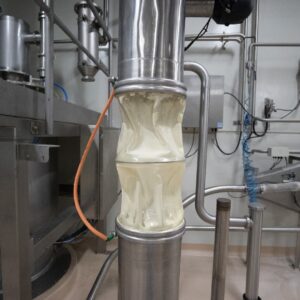
Once grounding, environment, and basic operating conditions are addressed, many stubborn static problems trace back to one detail: the connection between machines.
Standard plastic or rubber connectors can hold charge during operation. That’s why connector material and design matter at these points.
BFM® fittings address this with static-reducing connector options built specifically for powder-handling systems:
- Static-reducing materials that help charge release rather than build at flexible connections
- 100% sealed connections that keep product in the line and reduce the dust that contributes to cleanup and combustion risk
- Snap-in, tool-free design for fast inspection and changeover without opening up more than necessary
If static symptoms keep showing up at the same connection points, connector design — not just grounding or housekeeping — may need to change.
For more on connector materials and options, visit the electrostatic process page or see our products that assist with static reduction, including the Seeflex 040AS sleeve, the Flexi-earthed connector, and the grounding strap option. PSI can also help assess your specific transfer points if static symptoms keep coming back.
Frequently Asked Questions (FAQs)
What causes static in powder processing?
Static forms as powder moves through pipes, bends, drops, and connectors. High speed, dry air, and abrasive powders increase charge buildup.
How do you remove static charge from powder?
Combine grounding, humidity adjustments, process changes, and static‑reducing connector materials to help charge dissipate instead of accumulating.
What are best practices for grounding powder equipment?
Bond all metal components together and connect them to a reliable ground. Inspect grounding paths regularly, especially after maintenance.
When should you use a static‑reducing flexible connector?
When plastic or rubber connectors hold charge, when operators feel shocks, when dust leaks around flexible connections, or when handling combustible dust.
How do you choose the right solution for your powder line?
Start with the process: powder properties, conveying speed, dust behavior, humidity, wear on equipment, cleaning method, and where symptoms appear. Then match connector material and seal design to those conditions.
Where can you find technical information on connector options?
Here are the most direct starting points for connector materials, use cases, and fit guidance:
How do you find expert help with sizing or selecting a static-control connector?
Contact PSI. Share your equipment dimensions, powder type, operating conditions, and any known static or leakage symptoms — and we’ll help identify the right fit.
Is Your Facility Safe From Powder Hazards?
Static is one piece of keeping a powder‑handling system safe and running smoothly. If you want a broader look at the risks that show up across different processes, you can explore our free guide, A Comprehensive Guide to Safe Powder Handling.
If you’d like help reviewing your setup, contact PSI. We can talk through your equipment, discuss the areas where static shows up, and help you choose flexible connector options that support safety, cleanliness, and uptime.