

Choosing Flexible Connectors for Powder Processing
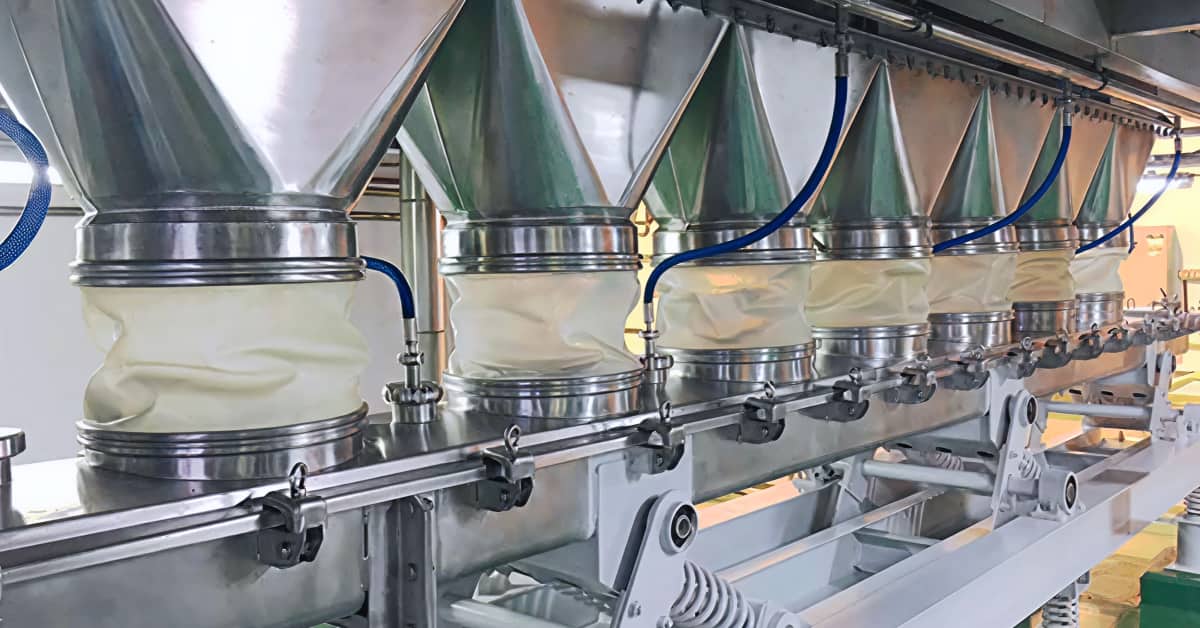
Powder behaves differently in every plant, but the failure points tend to repeat: dust escaping at connection points, inconsistent seals, and changeovers that drag on longer than they should.
Whether you’re moving food ingredients, lithium battery materials, pharmaceutical ingredients or nutritional supplements, the flexible connectors between your equipment are doing more work than they get credit for. When the wrong connector is in place, it often leads to product loss, dust control issues, compliance risk, and unnecessary downtime.
Here’s what to look for.
What the Right Connector Solves
Leakage
The most common failure is product escaping at the connection point. It leaks through a compromised seal, creates dust between two pieces of equipment, or escapes during changeovers.
In food and pharmaceutical environments, that’s a contamination event. In chemical or battery powder applications, it’s a combustible dust risk.
A connector that can’t maintain a 100% seal is a liability.
Downtime
Connector choice directly affects how long your line stays running. Hose clamp systems require torque wrenches, trained operators, and time. The tightening spec, the age of the clamp, and the condition of the bolt all vary from one installation to the next.
Every one of those variables is a potential failure point, and every failure costs time.
A well-designed flexible connector removes that variability. When changeovers are faster and more repeatable, uptime improves, not because anything broke less, but because there was less to fail. Most of that starts with choosing the right material for the job.
What to Look For: Powder Processing Connector Material
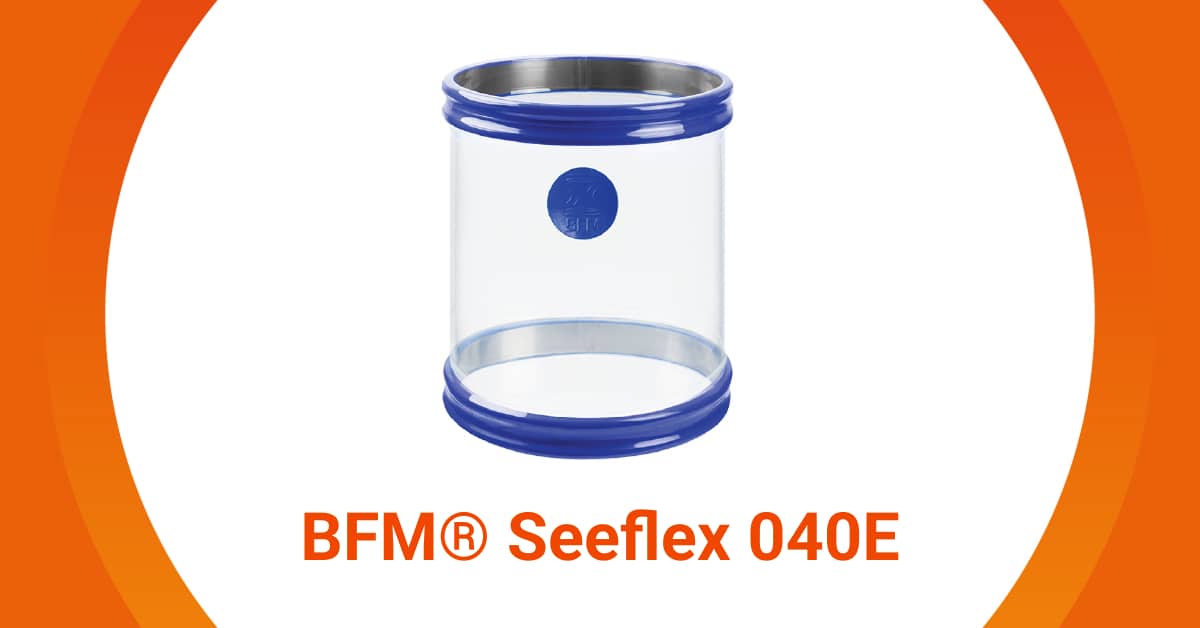
Material choice is one of the biggest reasons connectors fail. The standard BFM® flexible connector, the Seeflex 040E, handles powder applications from -25°C to 110°C. For most plants, that’s the right starting point.
If your application involves abrasive materials, high temperatures, static buildup, or aggressive cleaning, pay attention to material selection.
Durability and Abrasion Resistance
Some powders are harder on connectors than others. Sugar, silica, and mined minerals can wear through a sleeve quickly if the material isn’t right for the job.
For processes running above 200°C, a standard sleeve won’t hold up. The Teflex Woven BFM® flexible connector is built for those conditions and handles continuous temperatures up to 260°C.
Static-Dissipative Properties
Most dry powder can ignite. When powder moves through a connector, it builds up static. If that static isn’t released, it can spark near combustible dust.
If you’re handling combustible powders, check these three things:
- What your sleeve is made of and whether it holds or releases static
- Whether your process builds up enough charge to need a static-safe material
- Whether your facility falls under ATEX requirements
Some BFM® flexible connector materials are built to release that charge safely.
Cleanability and Changeover Speed
In food and pharmaceutical plants, clean surfaces matter. BFM® flexible connector materials meet USDA, 3-A, and EHEDG standards.
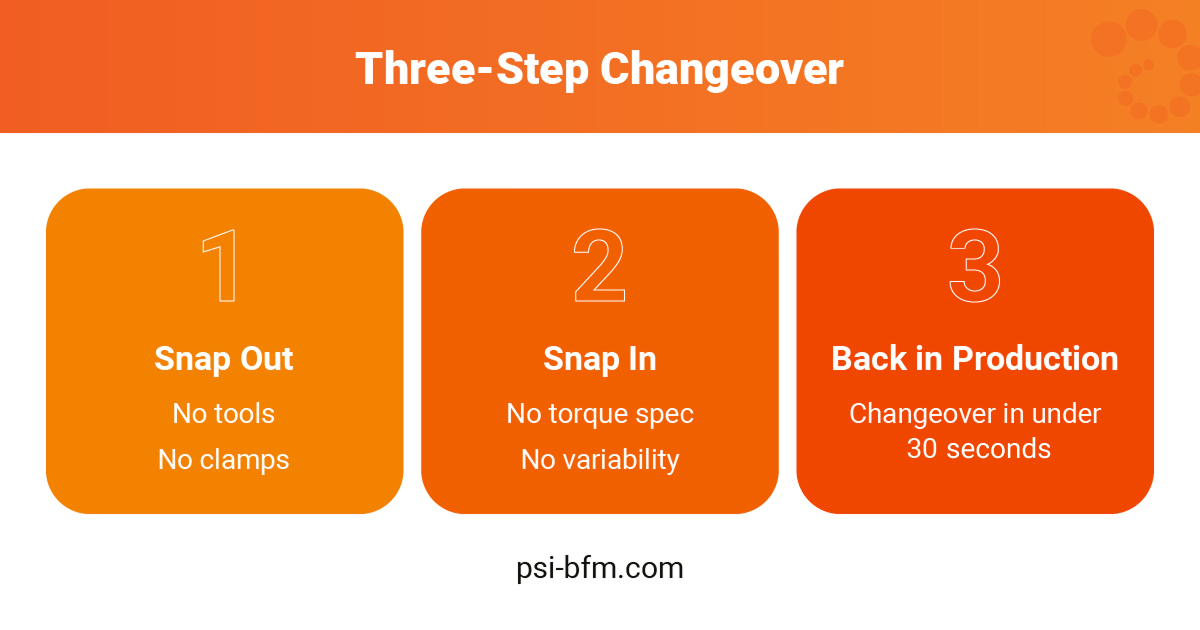
A connector that comes off without tools, in under a minute, with no loose hardware, is easier to keep clean than one you have to take apart.
Why Snap-In Connectors Outperform Hose Clamps
Changeover speed comes down to how the connector installs and is removed.
With a hose clamp system, the seal depends on who installed it, how carefully they tightened it, and what condition the hardware was in that day. Every installation is a little different, and over thousands of changeovers, those small differences show up as leaks and downtime.
BFM® fittings work differently. Two metal spigots are welded to the equipment.. After that, the flexible connector sleeve snaps onto each spigot. No tools. No tightening.
The snap-in design gives you the same seal every time, regardless of who installs it. The first person and the twentieth person get the same result. In food and pharma plants where every step gets documented, that kind of consistency is hard to achieve with a clamped system.
There’s nothing to over-tighten or under-tighten because there’s nothing to tighten at all. Every install gives you a dust-tight, 100% sealed, USDA-compliant, and ATEX-compliant connection.
Get Expert Help in Choosing the Right Connector
Picking the right flexible connector isn’t as simple as matching a picture in a catalog. Sizing depends on the gap between your equipment, your operating conditions, and what’s moving through the line. A sleeve that’s the right size but the wrong length can pull, sag, or leak. The right material in the wrong pressure range will fail early.
Here’s where PSI can help:
- Recommending the right connector based on your equipment and process conditions
- Confirming sizing for both new installs and retrofits
- Guiding material selection when temperature, static, or cleaning requirements are a factor
PSI has completed more than 25,000 installations across food, pharmaceutical, chemical, nutritional, battery, and other powder-handling industries. Your setup probably isn’t new to us, even if it’s new to you.
When the fit is right, the results are immediate. Changeovers get faster, dust stays contained, and the issues you were working around stop.
The BFM® Comparison Chart breaks down the full connector range by material, temperature, and application so you can see which options fit your process before you reach out. Download it here as a starting point, or contact PSI directly, and we’ll walk through your application with you.