

BFM® Blanking Caps: How to Seal Unused Spigots in Powder Processing Lines
Open spigots are easy to overlook because nothing is moving through them. But leaving one exposed can create problems long before it goes back into service. Dust escapes and settles around nearby equipment, while moisture or debris can enter the process and remain there until startup.
You’ll find open spigots during maintenance, shutdowns, line modifications, and new installations. A BFM® blanking cap seals those openings in seconds, and can be removed just as quickly when access is needed.
Let’s break down how it works, where it’s used, and how to specify the right size for your application.
Why Open Spigots Matter
The dust settling around an open spigot is a safety issue too, since most process powders are combustible. If you’re updating your Dust Hazard Analysis under NFPA 660, add open spigots to the list of places where dust can leave the line.
Food, dairy, and pharmaceutical lines face another challenge. Anything that gets in through an open spigot has to be cleaned out before the next run can start.
- Plastic and tape or bolted covers: slow to put on, and slow to take off again before production restarts
- Rubber or silicone bungs: can pop out if they aren’t seated right
The right cover stays sealed and lets operators see inside without opening the connection.
What a BFM® Blanking Cap Does
Think of a BFM® blanking cap as a flexible connector with nothing on the other end. It has the same snap-in cuff as a BLUEBAND™ flexible connector, so it fits any standard BFM® spigot without clamps or tools.
Seals Tighter Under Pressure
The cuff sits inside the spigot. When pressure in the line rises, it pushes the cuff harder against the steel, and the seal gets tighter.
That’s the same pressure spike that can pop a bung loose. The cap holds under vacuum as well.
Lets You See Inside Without Opening the Line
Blanking caps are made from Seeflex 040E, the same clear polyurethane used in the most common BFM® flexible connector. Because you can see through it, your team can check product flow, buildup, or fill level without opening anything. When someone needs a sample, the cap pulls out by hand and snaps back in when they’re done.
Where Blanking Caps Are Used
Some open spigots are temporary, like the ones left behind during a shutdown or an equipment swap. Others stay open by design, such as an inspection port your team checks while the line is running.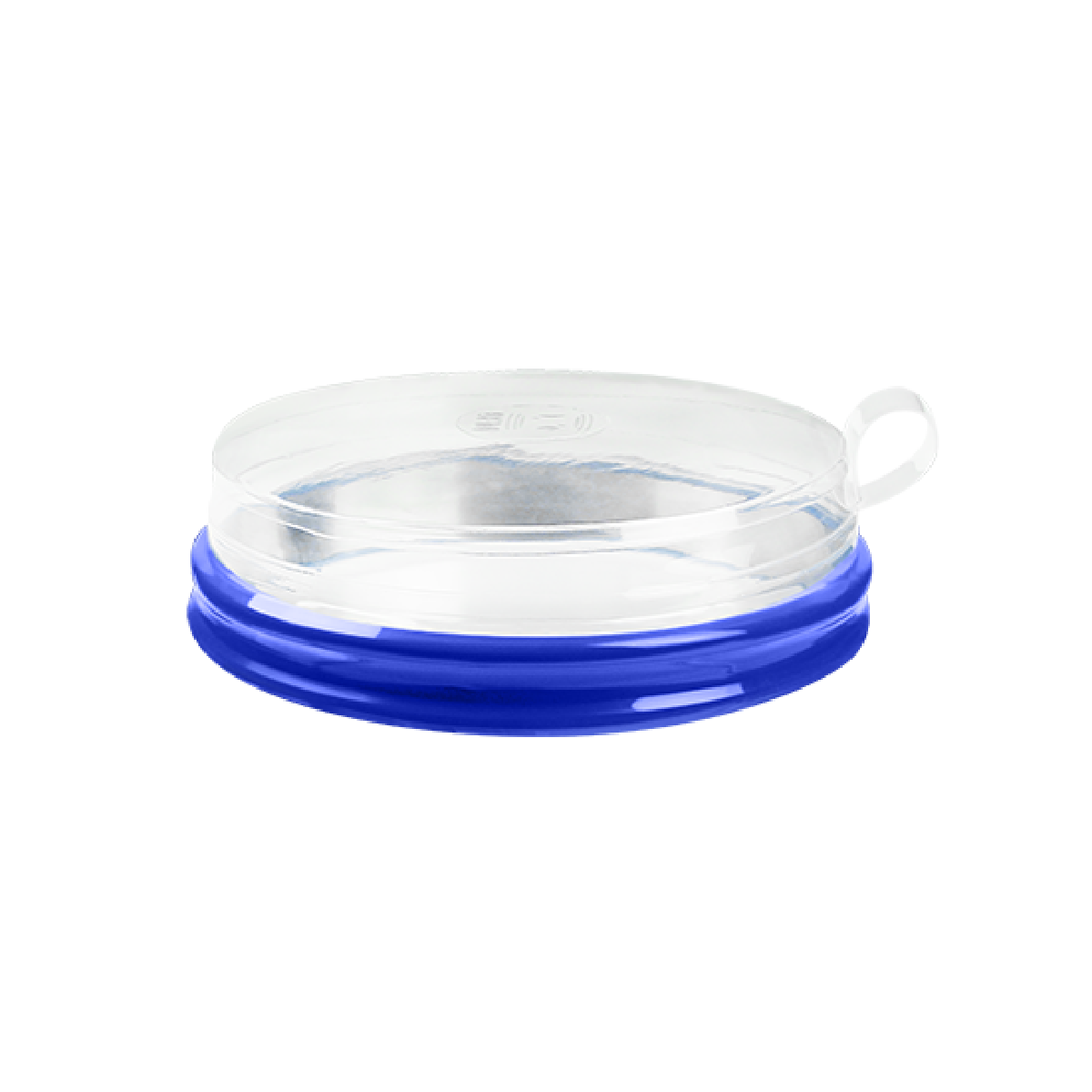
You’ll find both kinds in these situations:
- Shutdowns and maintenance: Cap the sections that come offline so dust stays in and debris stays out.
- Removed or reconfigured equipment: The spigot left behind stays sealed until the equipment returns or the layout is finalized.
- Idle sections between runs: On lines that handle several products, close off whatever the current run doesn’t use.
- CIP and washdown: A cap on the downstream opening keeps packing areas dry while upstream equipment is cleaned in place.
- New installations: Spigots welded in early are protected until their flexible connectors are sized and installed.
- Inspection ports: On sifters and most other equipment, the cap can stay in place during operation and work as a removable sight glass.
Save blanking caps for openings that don’t carry product. Any spigot that moves material between equipment still needs a flexible connector.
How to Size and Order a Blanking Cap
A blanking cap is sized to your spigot, so a 200mm spigot takes a 200mm cap. There’s nothing else to measure, since every cap is the same short length. When you contact PSI, have these ready:
- Spigot diameter: Sizes run from Ø100mm to Ø1,650mm (4″ to 65″). The blanking cap spec sheet lists every size.
- Location and use: Which equipment it’s going on, and for safety reasons, whether it’s for shutdowns, cleaning, isolation, or inspection.
- Operating temperature: Seeflex 040E is rated up to 110°C (230°F), so hotter spots on the line need a closer look first.
Find the Open Spigots on Your Line
Before your next shutdown or changeover, walk the line and note every spigot that will sit open, where it is, and its diameter. Send that list to a BFM®certified expert at PSI, and we’ll match a cap to each one.