
How to Clean BFM® Flexible Connectors by Material Type
Do you find that your team is replacing connectors more often than they should? When that happens, it’s natural to look at the process first. The cleaning routine is easier to miss. But a wash that works for one sleeve can shorten the life of another, and stronger chemicals don’t leave the line any cleaner.
So when you’re cleaning food processing equipment, the flexible connectors between your vessels and pipework need their own approach, and it starts with what the sleeve is made of.
Why Your Sleeve Material Matters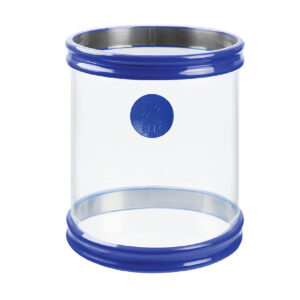
Put two sleeves made of different materials through the same wash, and you’d expect them to hold up equally well. They won’t. Every BLUEBAND™ flexible connector snaps into a BFM® spigot the same way, but sleeves are designed with different product specifications.
For instance, Seeflex sleeves, including the 040E, 040AS, and 060ES, behave a lot like a raincoat. Liquid stays on the surface, and a wipe takes it right off. Woven sleeves such as Teflex Woven, LM3, and LM4 are closer to a canvas jacket. The fabric soaks up whatever hits it, so we don’t generally recommend running woven sleeves through CIP.
Cleaning Seeflex Connectors (040E, 040AS, 060ES)
Between Runs
You don’t need anything harsh for everyday cleaning. A wipe with isopropyl alcohol and a microfiber cloth sanitizes the sleeve and keeps it clear enough to see product moving through. Warm water with a non-corrosive detergent works as well. Either way, wipe the sleeve and the inside of both spigots dry before snapping it back in.
Running CIP With Seeflex Connectors
CIP takes a little more thought. A detergent-only wash won’t cause problems, but once you add chemicals, their strength affects how long the sleeve lasts. We recommend these limits:
- Caustic: Keep the concentration at 1.5% or below.
- Acid: Keep the concentration at 0.8% or below.
- Peracetic acid and sodium hypochlorite (bleach): Avoid both where you can, since they’re harsh on polyurethane. If your sanitation plan requires them, use a low concentration and keep the temperature under 45°C (113°F).
- Hot water and steam: Wash with water no hotter than 100°C (212°F), and keep direct steam off the sleeve.
If your recipe goes over these limits, dial it back. Higher concentrations wear out the sleeve faster and are hard on seals and gaskets, too.
For CIP fluid that tends to collect at a bend, the 060ES Corner Connector has a 110° angle that helps drain it out of your equipment.
After Each CIP Cycle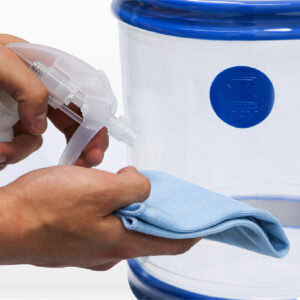
The connector made it through the cleaning cycle, but the cleaning cycle isn’t finished with the connector. Before the line restarts, remove each sleeve and wipe it and the inside of the spigot dry. That keeps leftover solution from sitting in the cuff.
You may also notice the sleeve picking up a slight yellow tint over time. That can happen with CIP chemicals, and it doesn’t affect performance or integrity. A little color on its own isn’t a reason to swap the sleeve.
If your team wants these steps on paper, download our Seeflex cleaning guide.
Cleaning Teflex Woven Connectors
Teflex Woven is a different story. It’s pure woven PTFE, so caustic and acid won’t damage the material, and it runs continuously at 260°C (500°F).
Why Woven Sleeves Come Off for Cleaning
The catch is the weave. Remember the canvas jacket? Wash solution gets into the fabric and can push right through it under pressure. Take Teflex Woven off the line before CIP and wash it on its own.
How to Wash a Woven Sleeve
Here’s the routine we recommend for woven sleeves, including LM3 and LM4:
- Agitate the sleeve in a warm water bath with a mild detergent and disinfectant.
- Rinse it with a low-pressure hose or a fresh water bath.
- If your sanitation program requires it, immerse it in a sanitizing solution.
- Drain it and let it air dry completely before it goes back in service.
For milk powder or other protein-based residue, add an overnight soak in a 0.5% enzyme-based detergent before you rinse.
Woven sleeves lose a little efficiency with every wash, so plan to replace them on a regular schedule. Our woven connector cleaning guide covers every step.
When a Dedicated Wash Sleeve Makes Sense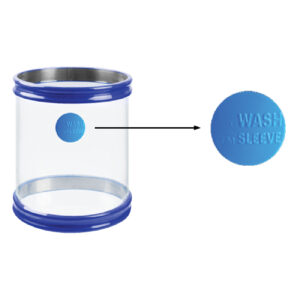
If your line runs CIP or wet washes often, the BFM® Wash Sleeve keeps your production sleeves out of the chemicals. It’s a Seeflex 040E stamped “Wash Sleeve,” so nobody mixes it up with the sleeves that run product.
Before CIP, operators swap the production sleeve for the wash sleeve, then switch back when the cycle is done. That lowers the chance of leftover solution reaching your product and gives operators an opportunity to wipe the spigot. Since it’s still Seeflex 040E, the same CIP limits apply.
Start With What’s Already on Your Line
Most plants build their cleaning programs to protect product quality. The best ones also protect connector life.
The easiest place to start is with what you already have. Pull the chemical concentrations and wash temperatures from your CIP and sanitation procedures. Then walk the line and note which sleeve material sits at each transfer point, and whether it stays in during cleaning.
If anything doesn’t line up, send your notes to PSI. One of our BFM® fitting Certified Advisors will help you figure out which connections need a different routine, a different material, or a wash sleeve.