

What Does BFM® Stand for? Meaning and Key Benefits
In powder processing, a “small” leak rarely stays small.
Clamped flexible connectors can create dust, cleanup time, contamination risks, and wasted product — often at the exact point where material moves between equipment.
This guide explains what BFM® stands for and why these fittings matter in real powder processing operations.
What Does BFM® Stand For? 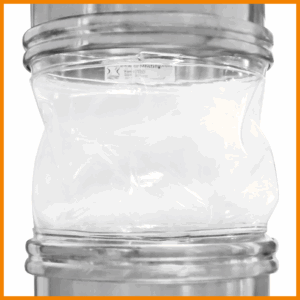
BFM® stands for Blair Forres McPheat, the inventor of the patented BFM® flexible connector system.
Blair visited processing plants and kept seeing the same problem everywhere he went. Leaking clamped connections were creating hazardous environments, contamination risks, and serious loss of product and time.
In 2009, he sketched out the solution at 2 AM — a flexible sleeve and spigot assembly that would actually seal. That sketch became the BFM® fitting we know today.
Now BFM® fittings are used in thousands of processing plants across more than 40 countries.
What Is a BFM® fitting?
A BFM® fitting is an alternative to traditional hose clamp connections.
These connectors work especially well in powder processing — food, ingredients, pharmaceuticals, and chemicals — anywhere dust containment and sanitation are critical.
The Seeflex 040E
The Seeflex 040E is one of the most common BFM® fittings, designed specifically for applications that vibrate, oscillate, or compress.
Beyond standard connectors
Depending on your application, BFM® systems can include breather bags, blanking caps, weighing bellows, and bulk bag loaders.
All of them share the same tool-free, snap-in design philosophy.

Why Traditional Connectors Fail in Powder Processing 
Traditional flexible connectors rely on clamps. In powder environments, that brings a familiar set of problems:
- Leaks at connection points—often where the trouble starts
- Dust explosion hazards and static ignition risk
- Employee exposure to harmful dust
- Product loss that eats into your profit margins
- Downtime when connectors are difficult to fit and replace
- Pinch and cut injuries during changeovers
- Inconsistent sizing that makes inventory management harder than it needs to be
BFM® fittings were originally designed to solve dust leakage at machinery transitions caused by poorly fitting hose clamps.
But once facilities made the switch, they found the benefits went well beyond stopping leaks.
What You’re Actually Investing In
The biggest upfront cost is installing patented stainless steel spigots.
Those spigots are what allow the flexible sleeve to form an airtight seal.
Here’s what to expect: spigots can be installed on processing equipment, but installation does require some downtime to modify your existing setup.
Once they’re in place though, replacing the sleeve takes just seconds.
That’s where a lot of teams feel the difference right away. Compared to traditional hose clamps, the process is faster (seconds instead of minutes), easier (no tools needed), and safer (eliminates pinch injury risk).

Long-Term Benefits of BFM® fittings
Once the system is installed, the benefits show up in places plants care about most: hygiene, safety, uptime, and maintenance effort.
Cleaner operations
BFM® fittings offer an airtight seal that effectively eliminates dust.
That means less dust and product buildup, lower contamination risk, and cleaner transitions that support high hygiene standards.
These connectors are also designed for Clean in Place (CIP) procedures, which makes cleaning and maintenance more manageable.
Why this matters
If your process requires frequent changeovers or you’re operating under strict hygiene expectations, connector performance can either protect your standards or quietly work against you shift after shift.
Enhanced safety
By reducing the risk of dust explosions, these connectors contribute to a safer work environment.
They also contain blasts much better than traditional connectors in the event of an explosion, and the easier installation helps reduce pinch injuries.
Improved efficiency
The snap-in design supports quick changeovers during production. Add in the system’s durability and sealing performance, and you also get:
- Longevity that reduces frequent replacement cycles
- A tight seal that prevents product leaks and waste
- Standardized sizing that simplifies facility-wide management
That last benefit becomes especially valuable when you’re dealing with multiple transfer points and a growing list of SKUs.
BFM® fittings vs. Traditional Connectors
Here’s the simplest way to think about it: where traditional flexible connectors leak, BFM® fittings are 100% sealed. That design difference creates benefits downstream.
| Traditional Connector | BFM® fitting |
|---|---|
|
Leaks |
100% sealed |
| Creates dust explosion hazards | Eliminates dust explosion hazards |
| Exposes employees to harmful dust |
Eliminates employee exposure to harmful dust |
| Product and profit loss |
Less product loss, more profit |
|
Prone to pinch/cut injuries during changeovers |
Tool-free replacement and easier changeovers |
| Failure point during explosions | Designed to contain explosions |
| Static ignition risk |
Static dissipating for safer operations |
|
Difficult to fit and replace; more downtime |
Snap-in sleeves install in seconds; quicker changeovers |
| Inconsistent sizes; complex inventory |
Standard sizes across the facility; simplified inventory |
| Not designed for every application |
Wide range of application-specific designs |
Real Results: Tyson Foods Inc.
Since its introduction, the BFM® fitting system has transformed thousands of factories around the world and is trusted by many leading manufacturers.
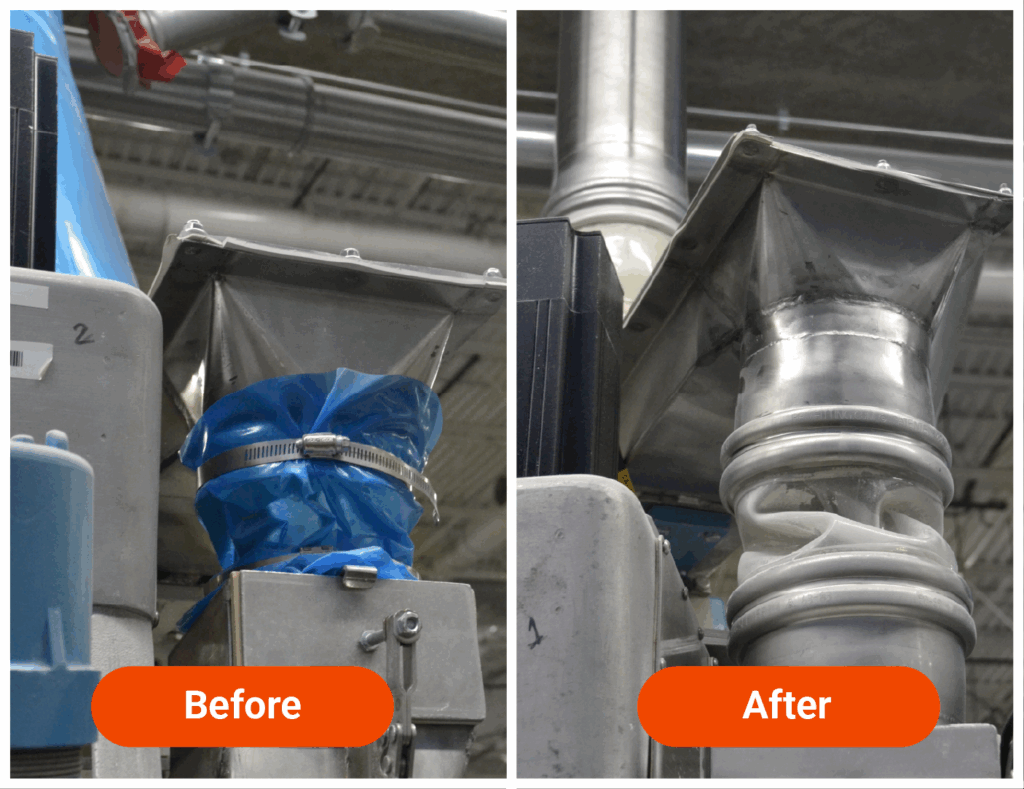
One example that stands out: Tyson Foods Inc., one of the world’s largest processors of chicken meat, saved $225,000 per year in cleaning costs alone after making the switch.
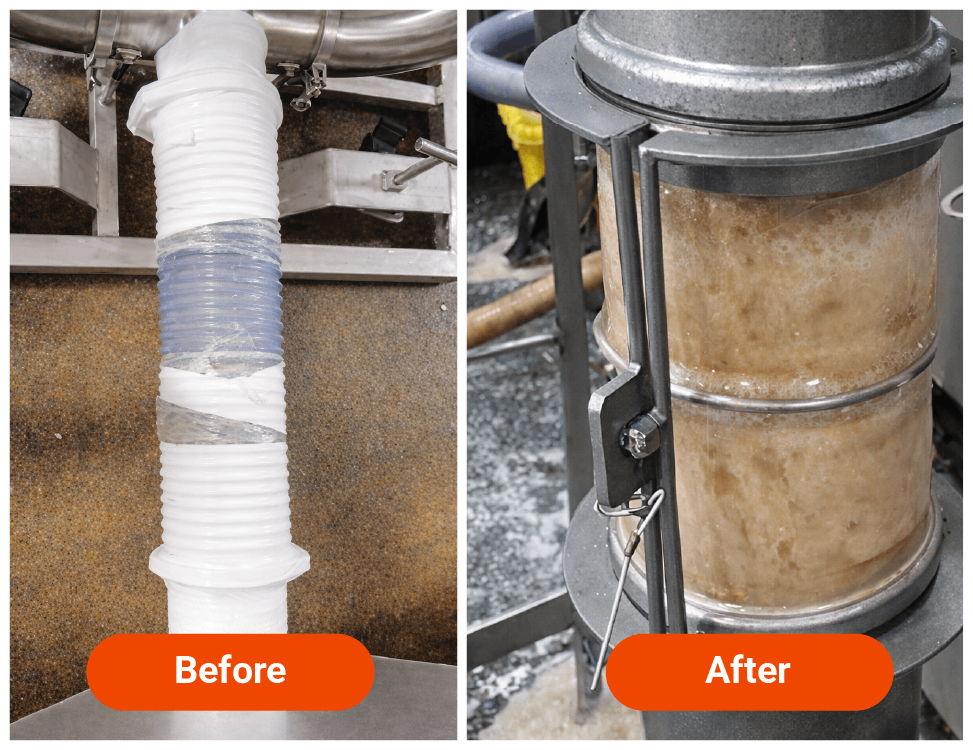
In the application below, the duct-taped connector was replaced with a BFM® spigot, a sleeve with a support ring, and a clamp to prevent sleeve collapse on the portable system.
Is a BFM® fitting Right for Your Facility?
These fittings are often a strong fit when you’re dealing with powder transfer points that leak, create dust, or require frequent cleanup.
They work especially well with equipment that vibrates, oscillates, or compresses (a common Seeflex 040E use case), and in industries with hygiene, containment, or regulatory demands—food, ingredients, pharma, and chemicals.
If you’re just getting to know BFM® fittings, you’re likely at the tip of the iceberg. From pharma and dairy to chemical processing and beyond, this system solves common problems across many applications.
Common Questions About BFM® fittings
What’s the upfront cost of a BFM® system?
The biggest investment is installing patented stainless steel spigots that enable the sleeve to form an airtight seal.
Spigots can be installed on processing equipment, though this typically requires some plant downtime to modify existing equipment.

How long does it take to replace a BFM® fitting sleeve?
Once spigots are installed, replacing the sleeve takes a matter of seconds.
What products are available besides connectors?
Beyond standard connectors, the product line includes breather bags, blanking caps, bulk bag loaders, and weighing bellows among other application-specific designs.
Where are BFM® fittings commonly used?
They’re especially effective in powder processing industries that manufacture food, ingredients, pharmaceuticals, and chemicals.
Next steps
Understanding what BFM® stands for is the easy part. The real win is choosing the right fitting configuration for your process—so you get the full benefit of 100% sealed performance, tool-free changeovers, and cleaner operations.
Powder-Solutions, Inc. (PSI) is the #1 North American distributor of BFM® fittings, and the preferred source with the largest in-stock selection and engineering expertise to help you find the right fit.
If you want help identifying the best BFM® fitting for your equipment and application, contact PSI at 877-236-3539.
